Conference on future of liberation theology includes examination of Mennonite peacemaking

by Raymond Plankey
National Catholic Reporter 

Mexico City (NCR)  — More than 300 theologians and pastoral workers met here last month in anticipation of the anniversaries of two events that have shaped contemporary Latin America: the 50th anniversary of the opening of the Second Vatican Council and the 40th anniversary of the publishing of Gustavo Gutiérrez’s book Liberation Theology.

These two events unleashed in Latin America a liberating process on the part of many Catholics at the grass roots as well as among theologians who reaffirmed a Latin American theology based on their own struggling people’s problems, an approach that became known as liberation theology.

The “Hope of Liberation and Theology” conference, held Oct. 5-8, was the third of a series of regional conferences planned as preparation for the main continental encounter to be held in Brazil Oct. 7-11, 2012.

“Liberation theology has moved from the original small group of theologians to people struggling within civil society for social change as well as to the academic scene,” theologian Maria Pilar Aquino of the University of San Diego told NCR.

About the future of the movement, she said, “There is a need for a new spirituality with special importance given to the feminist and indigenous dimensions.”

The first regional conference was held in Guatemala in April; the second was in Chile in July. A fourth was also in October in Colombia.

The Mexico City conference began with presentations by Fr. José Sánchez, the lead coordinator of the conference; Sacred Heart of Jesus Sr. Socorro Martínez, president of the Latin American theologians’ group Amerindia; and Brazilian Fr. José Marins, author and longtime supporter of the base ecclesial communities throughout Latin America. They provided the background to the conference, explaining the importance of Vatican II and the emergence of liberation theology.

Marins said, “Vatican II was a watershed in history and the first really universal council. However, it was being betrayed even before its inauguration and has never adequately been transmitted to the grass roots within the church.”

“It was a strategic practical error to entrust the application of the conclusions of Vatican II within the church to the Curia,” he said.

Leading off the first afternoon was Enrique Dussel, an Argentine Catholic layman in exile and now nationalized in Mexico. Dussel is a professor at two Mexican universities and heads the History of the Churches in Latin America project. He shared his personal story as illustrative of growth within the church of a liberating and empowering force for change, especially among the laity.

On the second day, Doris Mayol, a Baptist theologian, delivered a paper titled “New Paradigms of Biblical/Theological Interpretation from a Liberation Theology Perspective.” She spoke of these new paradigms as a huge snake in the jungle that you know is there but only catch glimpses of now and then.

She said that we all are conditioned and influenced by our own experiences and cultures as we try to interpret biblical passages, that no one is neutral and completely objective. After lunch, discussion groups reflected on how their faith perspectives can develop new biblical interpretations more in line with present social demands.

The day concluded with a roundtable discussion on peace and human rights, open to the public at the Human Rights Commission of Mexico City. Panelists included Pilar Aquino, Mayol, Emilio Álvarez Icaza, Oscar Enríquez, Fr. Alejandro Solalinde, Fr. Pedro Pantoja and Victor Quintana.

Solalinde and Pantoja operate shelters for Central American migrants attempting to pass through Mexico. They spoke of the horrors migrants must suffer at the hands of corrupt Mexican officials and organized crime, especially the Zetas drug gang, whose members kidnap and extort them.

American Dominican Sr. Kathleen Long, director of the Cuernavaca Center for Intercultural Dialogue on Development in Mexico, joined this discussion. “As Christians we are called once again to see the pain and struggle of those who migrate throughout Mexico in face-to-face encounters as Jesus did, listening to their pain and working energetically for change across borders,” she said. “The church of the people of God will be with the people as is Fr. Alejandro Solelinde in Oaxaca.”

The third day featured a presentation by Pilar Aquino titled “The Construction of Peace: Religious Initiatives for Transforming Violent Conflict.” Much has been done in this field already and there is no need to always be “reinventing the wheel,” she said. She suggested more study of others’ experiences, making special reference to Mennonite efforts.

On the final day, as participants discussed commonalties that arose during the conference, a consensus formed that suggested the need for a significant shift in mindset within church and society. Their discussion can be summarized in these statements:

  • The present neoliberal capitalist mindset of a consumer society is not sustainable;
  • There is a need to develop a theology of sufficiency;
  • Fulfillment comes from being more, not having more things;
  • The old adage “Live simply so that others can simply live” rings true and the survival of all will depend on building a new society that values solidarity and sustainability.

And then this question: “Can our church play an important role in this urgent task?”

The organizers had hoped that the Mexico City conference would have an ecumenical flavor and so partnered with a number of non-Catholic Christian organizations. The conference was held at the Mexican Theological Community in the southern part of Mexico City. This community is a 60-year-old collaborative ecumenical effort of Baptist, Methodist, Lutheran and Anglican seminaries.

Invitations were extended to theologians in the United States and Canada, even though their realities are quite distinct from the common reality of Latin America and the Caribbean. Only two came from the United States; a few U.S. missionaries working in Mexico and some Mexicans or Latin Americans working in the U.S. attended. No Canadians were present.

Before arrival, each participant was asked to enroll in one of six discussion groups to allow for maximum participation and generate the conclusions from the bottom up, which is clearly the vision and dynamic of this effort within Latin America. The themes of each group were ecclesial practice, economy, ecology, citizen participation, migration and human rights. A permeating theme throughout all the groups was the present situation of violence in Mexico and the struggle to regain peace.

The process used was “observe, judge, act,” the dynamic used in base ecclesial communities and even by the Latin American bishops in some of their meetings.

Amerindia has sponsored this series of regional conferences. A group of Latin American Catholic theologians — self-described as “progressives” — Amerindia began as an informal advisory group to bishops attending the Latin American Episcopal Conference’s meeting in Puebla, Mexico, in 1979. The group would eventually formalize its structure and extend membership beyond professional theologians to include other pastoral agents working in grass-roots organizations. The group also accompanied the Latin American bishops to their conferences in Santo Domingo, Dominican Republic, in 1992 and Aparecida, Brazil, in 2007. The group gathered in Rome in 1997 for the world Synod of Bishops on Latin America. It was at this meeting that they acquired the name Amerindia.

Raymond Plankey is the author of Questioning Myths of God and Country, a memoir of his 50 years as a Catholic lay missionary in Latin America. Plankey attended the original 1972 Christians for Socialism Conference in Santiago, Chile, one of the seminal events in the history of Latin America.
Julia Smucker, “Respect for Life: The Consistent Life Ethic in Catholic Social Teaching”

Click here to read Julia Smucker’s recent article in Life Matters Journal surveying the development of “consistent life ethics” in recent Catholic teaching. Smucker is an enthusiastic Bridgefolk participant and an MA student in Theology at Saint John’s School of Theology in Collegeville, MN.  She describes herself as proud that fellow students have dubbed her The Anti-Dichotomy Queen.

Catholic bishop and Mennonite Central Committee worker in Guatemala join to resist dam project threatening Maya Indian land

by Tobias Roberts
International Development Worker

(reposted from the Huffington Post)

Tension filled the cramped, block-wall room in the Guatemalan highlands as indigenous leaders sat across from negotiators for ENEL, an Italian-based energy company building a $228-million hydro-electric dam in the area. Local Mayan Ixhil leaders hoped the presence of a renowned Catholic archbishop, a prominent Presbyterian clergyman and a Mennonite development worker from the U.S. — me — would improve their chances in the high-stakes negotiations.

Community leaders in the heavily Catholic area first invited us to be part of the talks in May 2011, when ENEL agreed to sit down with indigenous peoples on whose ancestral lands the Palo Viejo Dam is being built. Guatemalan Archbishop Ramazzini, an internationally recognized defender of human rights, and Dr. Vitalino Similox, head of the Christian Ecumenical Council of Guatemala, helped facilitate the talks. I sat in as an international observer, having been sent to the area by the North American-based Mennonite Central Committee. Continue reading “Catholic bishop and Mennonite Central Committee worker in Guatemala join to resist dam project threatening Maya Indian land”

Mennonite leaders reflect positively on Assisi day of prayer

News Release
Mennonite World Conference
by Ron Rempel, MWC news editor

Assisi, Italy (MWC) —Danisa Ndlovu, Mennonite World Conference (MWC) president, and Larry Miller, MWC general secretary, joined with leaders of many other religious communities and several humanist organizations October 27, 2011 for a day of reflection, dialogue and personal prayer in Assisi, Italy, the home of the 12th century Catholic friar and preacher, St. Francis, known for his commitment to peace. Continue reading “Mennonite leaders reflect positively on Assisi day of prayer”

Assisi: May religions bring justice and peace upon the earth

VATICAN CITY, 28 OCT 2011 (VIS) – Shortly before 4 p.m. yesterday, the Holy Father and the heads of delegation left the convent of Santa Maria degli Angeli in Assisi, and walked in procession across the square in front of the building. They then boarded minibuses which took them to Piazza San Francesco for the closing event of the Day of reflection, dialogue and prayer for peace and justice in the world.

The ceremony began with some remarks from Cardinal Jean-Louis Tauran, president of the Pontifical Council for Inter-religious Dialogue. He affirmed that the hope for peace had been revived by the Assisi meeting and exhorted everyone to be witnesses and messengers of peace. Continue reading “Assisi: May religions bring justice and peace upon the earth”

Pope Benedict: Force in the name of Christian faith a great shame and an abuse

Assisi day of prayer for peace – today and 25 years ago

VATICAN CITY, 27 OCT 2011 (VIS) – Today marks the twenty-fifth anniversary of the historic meeting for peace in the Italian town of Assisi, called by Blessed John Paul II. For the occasion, Benedict XVI has made a pilgrimage to the city of St. Francis, accompanied by representatives of other religions and by non-believers, for a Day of reflection, dialogue and prayer for peace and justice in the world under the theme: “Pilgrims of Truth, Pilgrims of Peace”.

The Pontiff and the members of the various delegations left the Vatican by train at 8 a.m. today, reaching Assisi at 9.45 a.m. where they were greeted by the civil and religious authorities in front of the Basilica of Santa Maria degli Angeli. As the ceremony unfolded inside the basilica, the large numbers of faithful present were able to follow events on giant screens set up in the square outside.

Following a greeting from Cardinal Peter Kodwo Turkson, president of the Pontifical Council for Justice and Peace, a video was screened in commemoration of the 1986 meeting. Then, one after the other, the representatives of the various religions rose to speak: His Holiness Bartholomew I, Ecumenical Patriarch of Constantinople; Anglican Archbishop Rowan Williams of Canterbury, Primate of the Anglican Communion; Archbishop Norvan Zakarian, Primate of the Armenian Diocese of France; Rev. Olav Fyske Tveit, secretary general of the World Council of Churches; Rabbi David Rosen, representative of the Chief Rabbinate of Israel; Wande Abimbola, spokesperson for the Yoruba faith; Acharya Shri Shrivatsa Goswami, representative for Hinduism; Ja-Seung, president of the Jogye Order of Korean Buddhism; Kyai Haji Hasyom Muzadi, secretary general of the International Conference of Islamic Schools, and Julia Kristeva, representing non-believers.

The Holy Father then rose to make his address, extracts of which are given below: Continue reading “Pope Benedict: Force in the name of Christian faith a great shame and an abuse”

Pope Benedict: The Kingdom of Christ cannot be built by force

VATICAN CITY, 26 OCT 2011 (VIS) – Because of the rain, the Holy Father presided over this morning’s celebration of the Word in the Paul VI Hall, rather than in St. Peter’s Square as had been scheduled. The celebration of the Word took the place of the usual general audience, in view of the event due to take place tomorrow in the Italian town of Assisi: “Day of Reflection, Dialogue and Prayer for Peace and Justice in the World: Pilgrims of Truth, Pilgrims of Peace”. Before the celebration this morning, the Holy Father greeted pilgrims gathered in the Vatican Basilica who had been unable to find space in the Paul VI Hall.

Following a greeting from Cardinal Agostino Vallini, the Pope’s vicar general for the diocese of Rome, and the readings from the Bible, the Holy Father pronounced his homily.

“As Christians”, he said, “we are convinced that prayer is the most precious contribution we can make to the cause of peace. For this reason we, the Church of Rome and pilgrims from elsewhere, are gathered here today to listen to the Word of God and to invoke the gift of peace”. Continue reading “Pope Benedict: The Kingdom of Christ cannot be built by force”

Nobel Prize winner connected to peace-church tradition

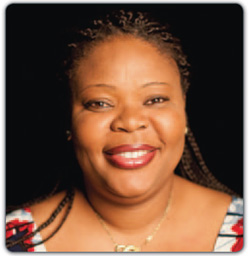
Leymah Gbowee
Leymah Gbowee

Harrisonburg, VA (EMU) — One of the three women receiving the 2011 Nobel Peace Prize, Leymah Gbowee, is closely connected with the “peace-church tradition” of the Mennonites.

Gbowee, who shares the prize with Liberian President Ellen Johnson Sirleaf and women’s rights activist Tawakkul Karman of Yemen, earned a master’s degree in conflict transformation from the Center for Justice and Peacebuilding (CJP) at Eastern Mennonite University (EMU) in Harrisonburg, Virginia. She attended CJP’s Summer Peacebuilding Institute in 2004 and completed its Strategies for Trauma Awareness and Resilience (known as “STAR”) program in 2005.

EMU’s Center for Justice and Peacebuilding (CJP) was one of the first university graduate programs in conflict and peacebuilding field. CJP’s Summer Peacebuilding Institute, the first of its kind, has become a model for other peacebuilding institutions around the world.

Gbowee led a nationwide women’s movement that was instrumental in halting Liberia’s second civil war in 2003.

“Leymah Gbowee mobilized and organized women across ethnic and religious dividing lines to bring an end to the long war in Liberia, and to ensure women’s participation in elections,” noted the Norwegian Nobel Committee in making the award. “She has since worked to enhance the influence of women in West Africa during and after war.” Continue reading “Nobel Prize winner connected to peace-church tradition”

Mennonite interchurch leader analyzes shift away from just war theory

Writing in the Sept. 12 issue of the Mennonite Weekly Review, Andre Gingerich Stoner observes that leaders of Christian churches from around the world are increasingly concluding that the just war theory is obsolete.  Stoner is director of holistic witness and interchurch relations for Mennonite Church USA.  Here is his commentary:


André Gingerich Stoner

Just war concept obsolete
by André Gingerich Stoner
Mennonite Weekly Review

In a remarkable shift, a key World Council of Churches statement describes the concept of a just war as obsolete. It calls for a fundamental shift in ethical practice to what it calls “just peace.”

The Ecumenical Call to Just Peace repeatedly lifts up the life, teachings, death and resurrection of Jesus as the model for Christian peacemaking.

The 13-page document is peppered with sentences like, “Jesus told us to love our enemies, pray for our persecutors, and not to use deadly weapons … Despite persecution, he remains steadfast in his active nonviolence, even to death.”

Continue reading “Mennonite interchurch leader analyzes shift away from just war theory”