Bridgefolk is a movement of sacramentally-minded Mennonites and peace-minded Roman Catholics who come together to celebrate each other's traditions, explore each other's practices, and honor each other's contribution to the mission of Christ's Church.
Due to various technical difficulties, it has taken us a few months to post videos from our summer conference in Winnipeg. We apologize for the delay.
Thankfully, they are now available by clicking here. You will find keynote addresses by Dr. Jennifer Otto and Fr. John Klassen OSB, along with Q&A sessions following each one. Also available is a panel discussion with stories of ecumenical dialogue.
When Bridgefolk formed in 2002, Saint John’s Abbey in Collegeville, MN – under the leadership of Abbot John Klassen – offered to be a home for this fledgling movement. Initial annual conferences were hosted by the Abbey. After several years, some of the Catholic participants expressed interest in visiting Mennonite settings. Conferences began to alternate between the abbey (as well as Saint Benedict’s Monastery) and various Mennonite institutional settings locations in Virginia, Pennsylvania, Ontario, Manitoba, Washington, and Indiana. Over the years, Anabaptist Mennonite Biblical Seminary (AMBS) in Elkhart, Ind. hosted three conferences and several of its faculty members served key roles in Bridgefolk leadership and on the board.
In 2024 the Bridgefolk board initiated conversations with AMBS leadership about the possibility of establishing a formal institutional relationship, so that Bridgefolk would have both Catholic and Mennonite “homes.” This has now been formalized in a memo of understanding, signed in summer 2025.
Some of the items of mutual benefit outlined in the agreement include:
a designated Bridgefolk board member appointed from the AMBS teaching or administrative faculty.
opportunities to co-sponsor events of shared interest and to collaborate in the development of biblical and theological resources that further our shared call to peacemaking.
providing a safe space for Catholics and Mennonites who wish to study and worship in each other’s milieu, together with Saint John’s Abbey
The bylaws of Bridgefolk specify that one director of the board be “an official representative of a recognized body or institution within the Mennonite tradition.” This agreement formalizes AMBS as this “recognized institution body or institution,” for the sake of continuity and accountability.
Woodcut of 16th-century Anabaptist leader and eventual martyr Dirk Willems halting his escape from prison to rescue the guard pursuing him. From Wikimedia Commons.
In this recently-published article, Dr. Jeremy M. Bergen of Conrad Grebel University College at the University of Waterloo introduces the Anabaptist-Mennonite movement for Canadian Catholics and reflects on its significance for other Christians.
Jeremy Bergen
Just over 500 years ago, on January 21, 1525, several adults gathered in a home in Zurich. After prayer and discussion, former Catholic priest George Blaurock asked one of the men present, a university student named Conrad Grebel, to baptize him. After Grebel did so, Blaurock proceeded to baptize the others gathered there. This group had initially been keen on Ulrich Zwingli’s religious reforms in the city, but were frustrated by its slow pace and the role of the secular authorities in implementing change. The emerging movement of dissenters believed that baptism was exclusively for (adult) believers. They placed an emphasis on a life of discipleship as following the teachings and example of Jesus, and the local congregation as a voluntary community of committed believers who interpret the Bible together. They believed in the separation of church and “state,” and the rejection of the sword. A movement with these commitments emerged in Switzerland, South Germany, and the Netherlands.
This ritual act in 1525 marked the beginning of the Anabaptist movement. …
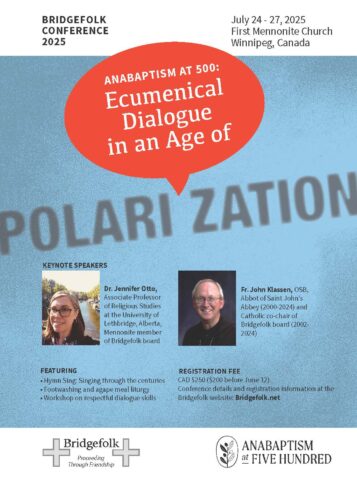
This year’s conference will look at the birth of Anabaptism from both a Mennonite and a Roman Catholic perspective, what has changed in the past five centuries, and what the implications are for ecumenical dialogue today.
The Mennonite keynote address will be given by Dr. Jennifer Otto, Associate Professor in the Department of History and Religion at the University of Lethbridge, where she teaches courses on Christianity, Bible, and Western Religions. Dr. Otto’s current research project, “Remembering Anabaptist Martyrs,” investigates the reception and representation of early Christian martyrs among Anabaptists in the 16th century and in the present day.
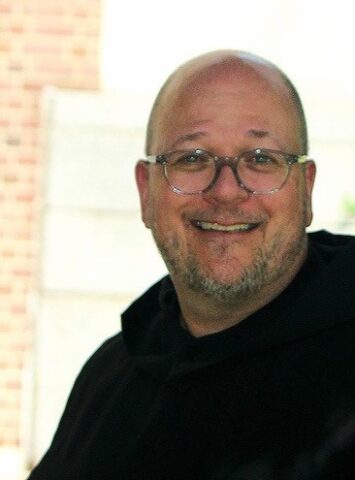
We also welcome Fr. John Klassen OSB, as our Roman Catholic keynote speaker. Fr. John was abbot of Saint John’s Abbey, in Collegeville, Minnesota, for over 23 years, and was instrumental in starting and supporting Bridgefolk during that time. Before becoming abbot, he received a doctorate from The Catholic University of America in Washington, DC, in 1985, taught at Saint John’s Preparatory School (1972-77) and Saint John’s University (1983-2000), and was the director of the university’s senior seminar program (1986-88), and of the Peace Studies Program (1988-90). He was the director of monastic formation for the abbey from 1993-99.
This conference will also feature a panel discussion with others who are involved in ecumenical dialogue and work, locally and elsewhere. The conference will feature a workshop to equip participants with practical tools to engage in respectful dialogue as well as small groups in which to practice these tools.
The 2025 annual Bridgefolk conference will be held July 24-27, 2025 at First Mennonite Church, Winnipeg, Manitoba—Treaty 1 Territory and the homeland of the Metis Nation. This is the 23rd annual Bridgefolk gathering, the second time it will be held in Winnipeg, and the third time in Canada.
Bridgefolk is a grassroots ecumenical movement of Mennonites and Roman Catholics who work together toward Christian unity by “proceeding through friendship.” Newcomers are always welcome at Bridgefolk gatherings, regardless of religious affiliation.
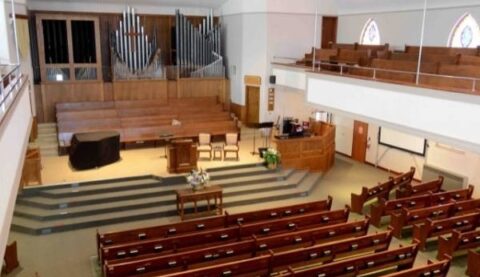
First Mennonite Church, Winnepeg, Manitoba (photo by George Penner)
The 2025 conference theme is “Anabaptism at 500: Ecumenical Dialogue in an Age of Polarization.” This year’s conference will look at the birth of Anabaptism from both a Mennonite and a Roman Catholic perspective, what has changed in the past five centuries, and what the implications are for ecumenical dialogue today.
The Mennonite keynote address will be given by Dr. Jennifer Otto, Associate Professor in the Department of History and Religion at the University of Lethbridge, where she teaches courses on Christianity, Bible, and Western Religions. Dr. Otto’s current research project, “Remembering Anabaptist Martyrs,” investigates the reception and representation of early Christian martyrs among Anabaptists in the 16th century and in the present day.
We also welcome Fr. John Klassen OSB, as our Roman Catholic keynote speaker. Fr. John was abbot of Saint John’s Abbey, in Collegeville, Minnesota, for over 23 years, and was instrumental in starting and supporting Bridgefolk during that time. Before becoming abbot, he received a doctorate from The Catholic University of America in Washington, DC, in 1985, taught at Saint John’s Preparatory School (1972-77) and Saint John’s University (1983-2000), and was the director of the university’s senior seminar program (1986-88), and of the Peace Studies Program (1988-90). He was the director of monastic formation for the abbey from 1993-99.
This conference will also feature a panel discussion with others who are involved in ecumenical dialogue and work, locally and elsewhere. The conference will feature a workshop to equip participants with practical tools to engage in respectful dialogue as well as small groups in which to practice these tools.
“Bridgefolk brings a unique set of gifts to this work,” notes Laura Funk, long-time Bridgefolk participant and local conference organizer. “Mennonites and Catholics are in conversation and prayer with each other. Often we do our best learning in the presence of those who have had a different experience, who bring different assumptions and history to the challenge of respectful dialogue in an age of increased polarization. In addition, we are called together to be peacemakers, with a commitment to the non-violence of Jesus in the Gospel. This call shapes our approach to listening, speaking, thinking, and acting.”
The conference will include a foot-washing service and agape meal, as well as a hymn sing, which have become favorite elements of Bridgefolk gatherings.
2025: Remembering Zurich and Nicaea January 27, 8-9:30 p.m. ET
Jennifer Otto, Associate Professor of Religious Studies at the University of Lethbridge and Bridgefolk board member.
The year 2025 marks 500 years since the first adult believers’ baptisms of the Anabaptist movement took place in Zurich, Switzerland. It also marks 1700 years since the Council of Nicaea, where the Nicene Creed was established as the first ecumenical statement of “catholic” Christian faith. In this webinar, Bridgefolk Board Member Jennifer Otto, Associate Professor of Religious Studies at the University of Lethbridge, will provide a brief historical introduction to the events of both Nicaea and Zurich and invite us into conversation about unity and division within the Church.
How should we, as Mennonites and as Catholics, commemorate these two events?
How do these anniversaries impact the way we think about “proceeding in friendship” together?
Can we celebrate the Nicene Creed and the beginnings of Anabaptism while acknowledging the pain caused by the ruptures in the Body of Christ that both events embody?
War, Technology, Acceleration: Responding to the Cries of the Earth Through Stability and Contemplation Tuesday, October 8, 8:15-9:30 pm ET
In this presentation, Bridgefolk Board Member Br. Denys Janiga OSB will talk about the relationship between war, ecology, and society, with a focus on technology.
He will discuss some of the recent technologies being deployed in modern conflicts, including Ukraine and Russia, Gaza and Israel, and Azerbaijan and Armenia. This will then move into a discussion of the notion of the “technocratic paradigm,” which Pope Francis has critiqued in his encyclical Laudato Si. Building on the pope’s encyclical, Br. Denys will use the work of Hartmut Rosa to better understand the temporal dimension of modern societies that he refers to as acceleration. The presentation will conclude with a Benedictine response through the vow of stability and contemplation.
After working as a program development assistant for the Environmental Studies program at the College of Saint Benedict (CSB) and Saint John’s University (SJU), Br. Denys has recently joined the university’s Campus Ministry staff. A member of Saint John’s Abbey, he is also a student in the Saint John’s School of Theology.
People on Bridgefolk mailing lists will receive a Zoom link on the morning of October 8. Click here to subscribe.
Bridgefolk Summer Retreat 25-28 July 2024 | Saint John’s Abbey, Collegeville, MN
Spiritual Practices for Peacemaking: Nurturing Resistance and Resilience Featuring guest facilitator Sarah Augustine, Executive Director of the Coalition to Dismantle the Doctrine of Discovery
We will come together as Catholics and Mennonites committed to peacemaking at a time of multiple challenges: climate disaster, protracted war in Ukraine and devastating destruction and death in Gaza, political and religious polarization during an election year in the US, White Christian Nationalism, and the ongoing struggle for Indigenous rights and racial justice in the US and Canada.
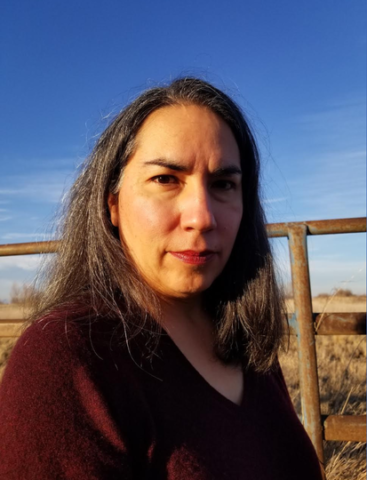
Sarah Augustine
Using the framework of resistance and resilience from Potawatomi author Kaitlin Curtice, the presenter at the September 2023 AMBS Rooted & Grounded/Bridgefolk Conference in Indiana, we will reflect on scripture and take part in a variety of spiritual practices from each of our traditions and beyond. Sarah Augustine will offer teaching and invitations for resisting settler colonialism and will lead us in ceremony that draws from and honors the wisdom of her Pueblo (Tewa) people. We will share stories and learn from the experiences of one another to strengthen our peace witness. We welcome the participation of families with children.